
The Bag Maker’s Guide to Interfacing: How to Choose the Right One With Confidence
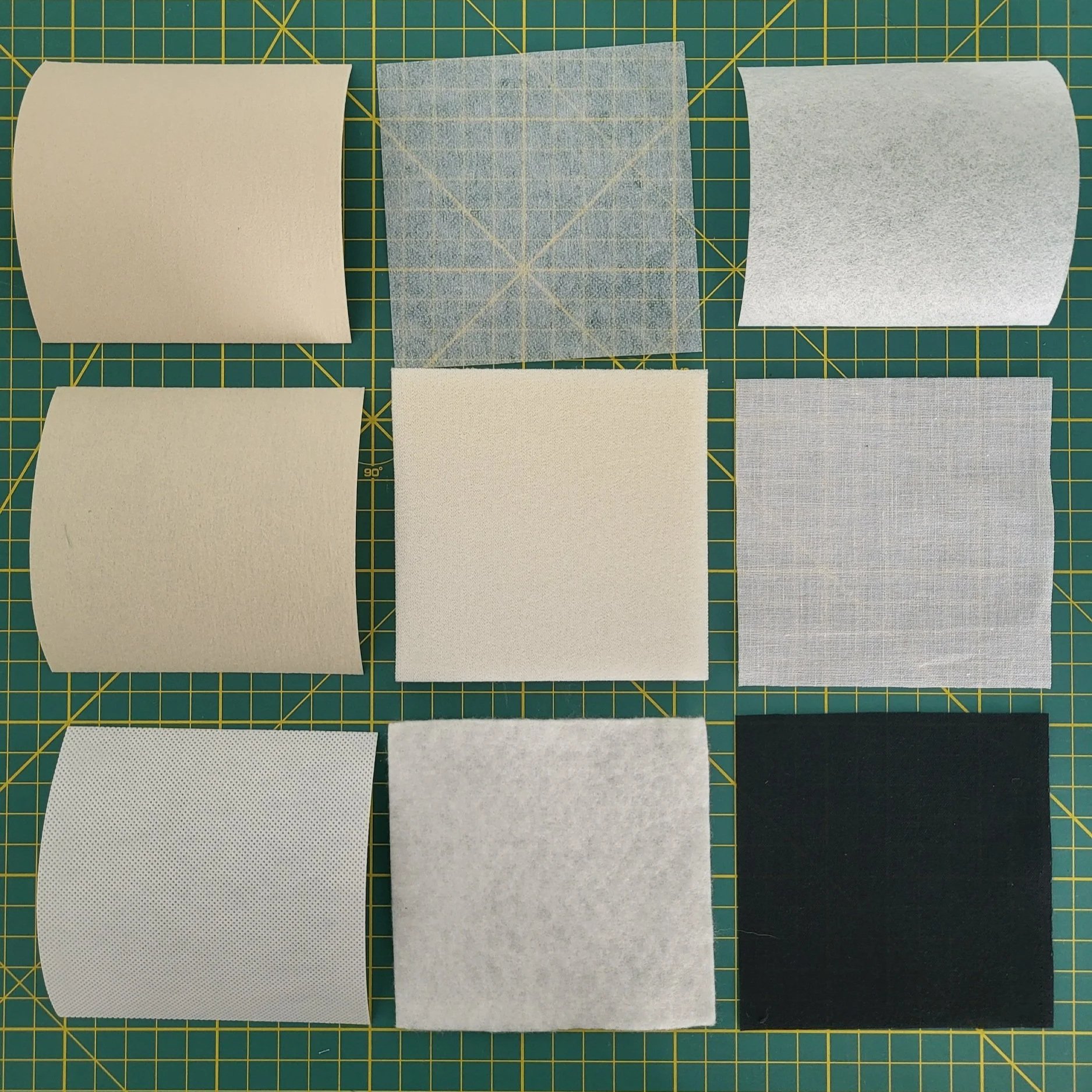
Top row: Decovil, F220, H250
Middle row: Decovil Light, Style Vil, G700 (white)
Bottom row: S520, Thermolam, G700 (Black)
For bag makers, interfacing is often the difference between a project that feels polished and professional, and one that turns out too floppy, too bulky, or far stiffer than expected.
The challenge is that interfacing can also be one of the most confusing parts of bag making.
Patterns often refer to brand-specific names, international products, or shorthand that assumes you already know the feel of the finished bag. Home sewists are then left trying to answer difficult questions:
Will this bag stand up on its own?
Will the flap be too soft?
Do I need padding or crisp structure?
What if the pattern uses a brand I can’t buy in the UK?
That uncertainty is exactly why choosing the right interfacing matters so much.
The good news is that once you start thinking about interfacing in terms of the finished feel of the bag, the choice becomes much easier.
Whether you’re sewing your first pouch or refining the structure of a bag pattern you already know well, understanding what each interfacing does helps you make better choices with far less guesswork.
Why interfacing matters in bag making
Unlike garments, bags need to do more than simply drape nicely.
They need to:
hold their shape
support weight
resist stretching
protect the contents
create clean edges and sharp corners
survive daily wear
The same outer fabric can behave completely differently depending on the interfacing behind it.
A quilting cotton tote with G700 feels stable and crisp. The same fabric paired with Style Vil becomes soft, padded, and able to stand upright. Add Decovil Light, and the result becomes structured and architectural.
This is why interfacing should be thought of as part of the design of the bag, not just an extra layer hidden inside.
It’s also why it can feel difficult to get right: there often isn’t one ‘correct’ answer, only the finish you want.
Choosing the right interfacing
The easiest way to choose is to think about the finished feel you want.
For stability without bulk
Choose Vlieseline G700.
This is the go-to woven fusible for bag makers, and the most useful starting point for cotton, canvas, pockets, linings, and zip panels.
G700 White – ideal for light fabrics and linings
G700 Black – perfect for dark fabrics where show-through matters
B700 White – this is the same weight and feel as G700, but using biodegradable glue which makes this a more eco-friendly option.
A particularly useful technique is doubling up G700.
If one layer gives good support but the fabric still feels a little too soft, a second layer can add exactly the extra structure needed without jumping straight to foam or Decovil.
This works beautifully for:
cotton canvas totes
handbag panels
flaps
pouch exteriors
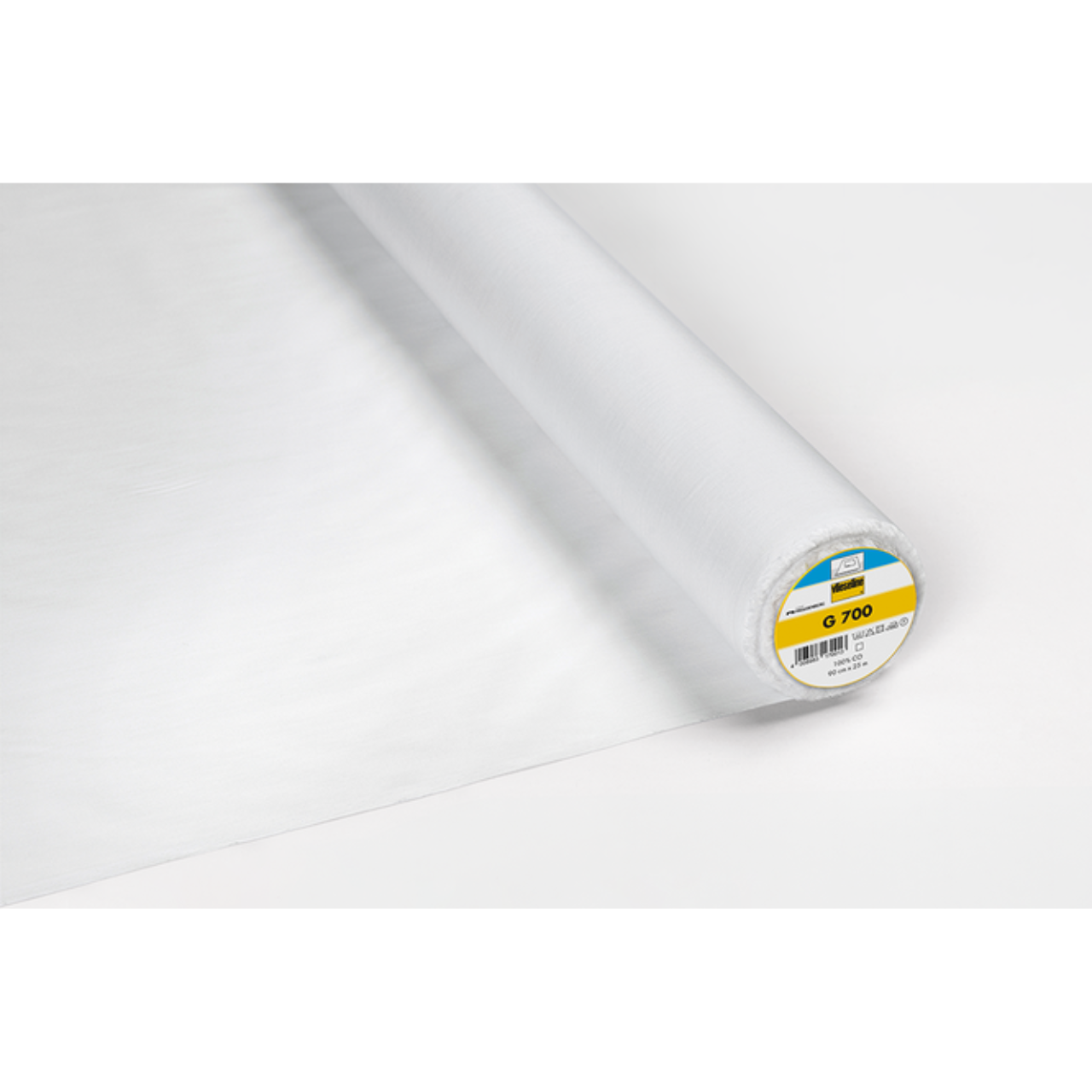
G700 is one of the most popular woven fusible interfacings for bag making, dressmaking and general sewing. Made from 100% cotton, it adds stability and structure while allowing your fabric to retain its natural drape.
Unlike non-woven interfacings, G700 behaves like fabric, making it ideal when you want support without adding unnecessary stiffness. It's a favourite for bag makers and is often chosen as an alternative to Pellon SF101.
Key Features:
100% cotton woven fusible interfacing
White
Medium weight
Iron-on adhesive backing
Soft, stable finish with excellent drape
Suitable for lightweight to medium-weight woven fabrics
Machine washable once applied
Approx. 90cm wide
Perfect For:
Bag making
Purses and pouches
Tote bags
Shirt collars and cuffs
Waistbands
Facings
Home décor projects
Quilting and craft sewing
How to Apply:
Place the adhesive side against the wrong side of your fabric. Cover with a damp pressing cloth and press each area for around 10-12 seconds without moving the iron. Allow the fabric to cool completely before handling to achieve the strongest bond.
As with all interfacings, we recommend testing on a fabric scrap before starting your project.
Ordering Information:
This interfacing is sold by the quarter metre.
Quantity 1 = 25cm
Quantity 2 = 50cm
Quantity 3 = 75cm
Quantity 4 = 1 metre
Multiple quantities will be supplied as one continuous length wherever possible.
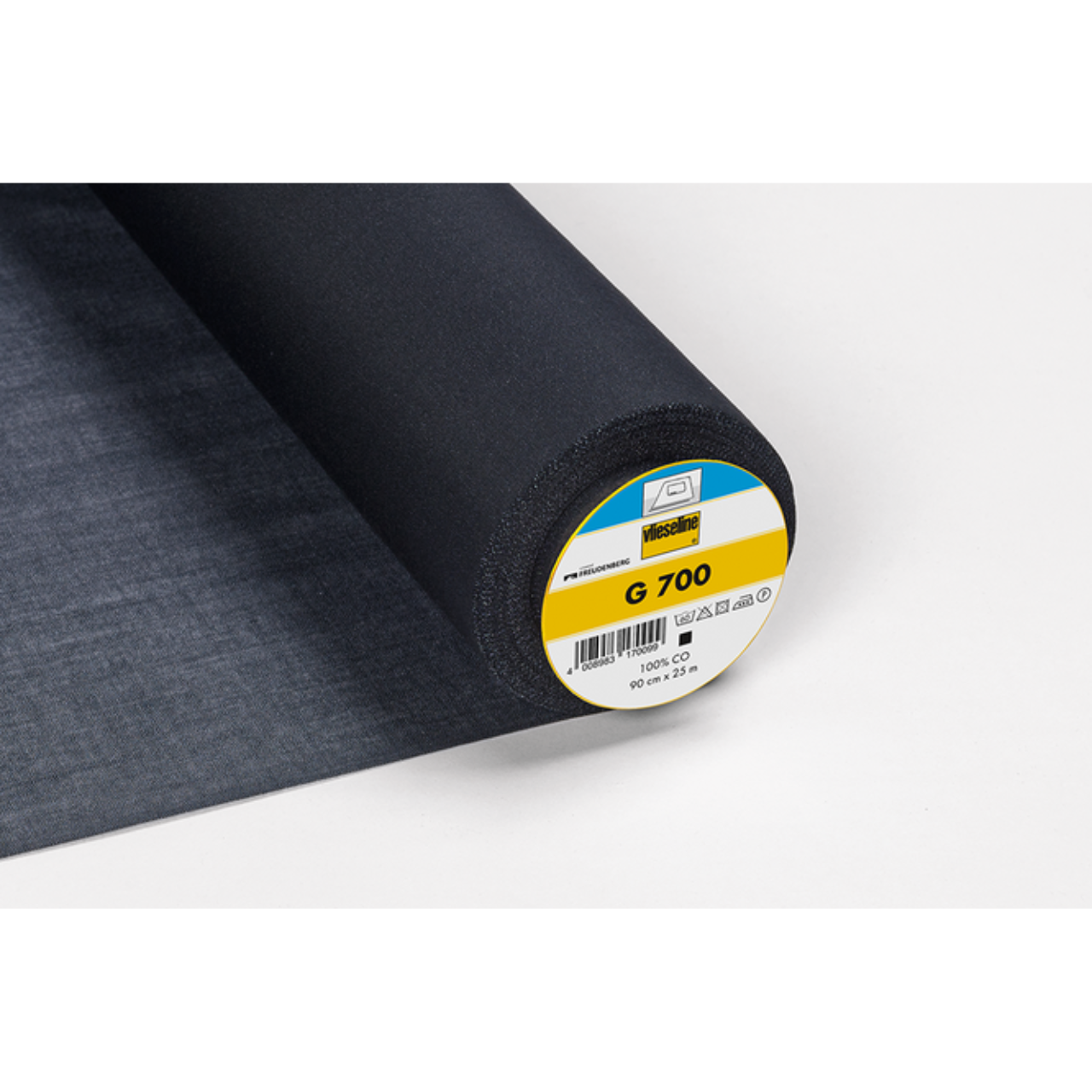
G700 is one of the most popular woven fusible interfacings for bag making, dressmaking and general sewing. Made from 100% cotton, it adds stability and structure while allowing your fabric to retain its natural drape.
Unlike non-woven interfacings, G700 behaves like fabric, making it ideal when you want support without adding unnecessary stiffness. The black version is perfect for use with darker fabrics, helping to maintain a professional finish without lighter interfacing showing through. It's a favourite for bag makers and is often chosen as an alternative to Pellon SF101.
Key Features:
100% cotton woven fusible interfacing
Black
Medium weight
Iron-on adhesive backing
Soft, stable finish with excellent drape
Suitable for lightweight to medium-weight woven fabrics
Machine washable once applied
Approx. 90cm wide
Perfect For:
Bag making
Purses and pouches
Tote bags
Shirt collars and cuffs
Waistbands
Facings
Home décor projects
Quilting and craft sewing
How to Apply:
Place the adhesive side against the wrong side of your fabric. Cover with a damp pressing cloth and press each area for around 10-12 seconds without moving the iron. Allow the fabric to cool completely before handling to achieve the strongest bond.
As with all interfacings, we recommend testing on a fabric scrap before starting your project.
Ordering Information:
This interfacing is sold by the quarter metre.
Quantity 1 = 25cm
Quantity 2 = 50cm
Quantity 3 = 75cm
Quantity 4 = 1 metre
Multiple quantities will be supplied as one continuous length wherever possible.
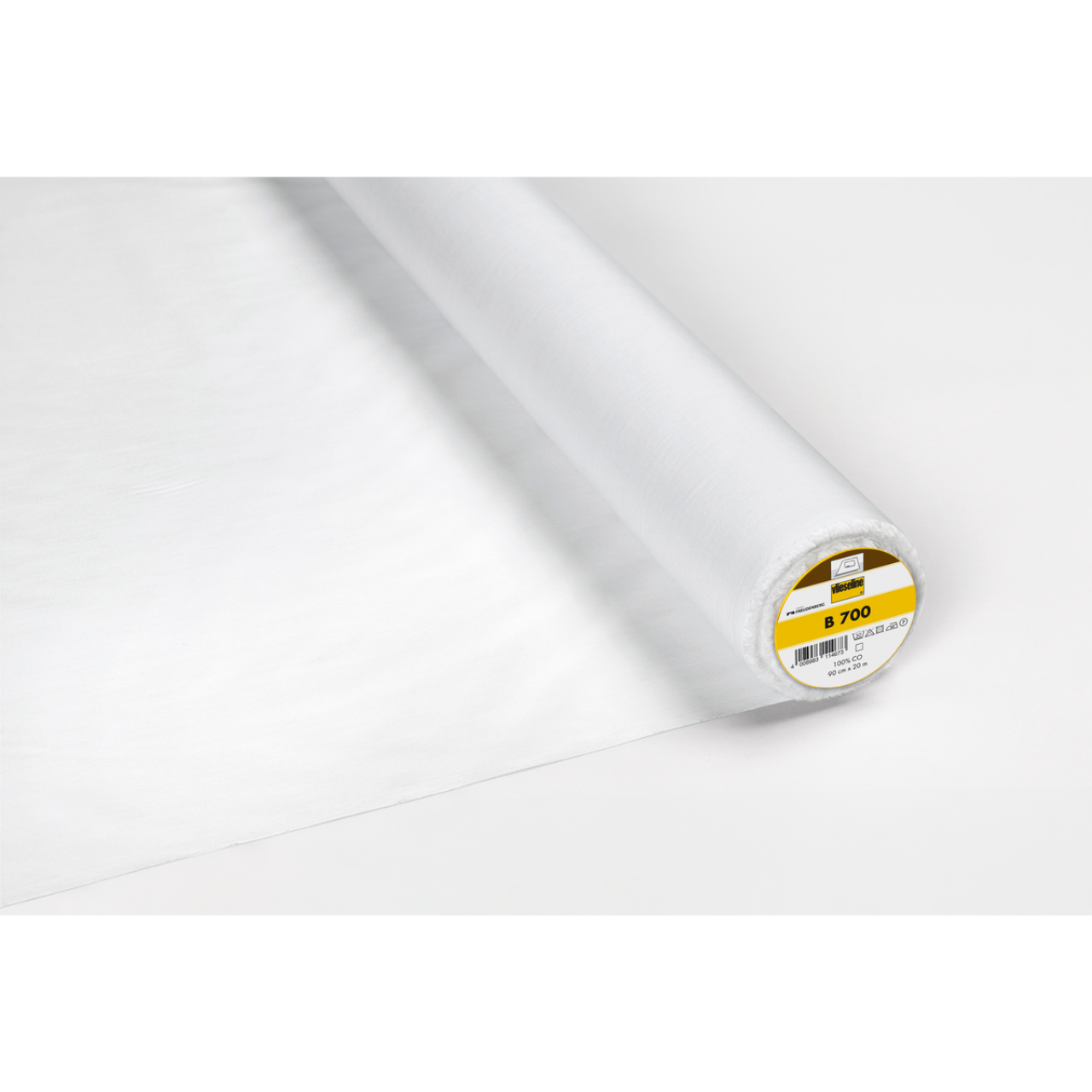
B700 is the same weight and style as the G700 interlining you know and love, except the glue is biodegradable(!)- making this a great eco option.
It’s a versatile woven fusuble interlining for bags, shirts, blouses, with a cotton base.
For use with lightweight to mediumweight fabrics.
Don’t forget, you can double up for a sturdier bag.
For soft padding and body
Choose 272 Thermolam, Legacy Fusible Fleece TP971F equivalents, or Style Vil.
These are excellent when you want body, softness, and a more tactile finish.
272 Thermolam or Legacy Fusible Fleece TP971F give gentle padded softness
Style Vil adds loft and that boutique bag feel, ideal for bags that need to stand up
These are especially good for:
cosmetic bags
wash bags
laptop sleeves
quilted pouches
structured totes
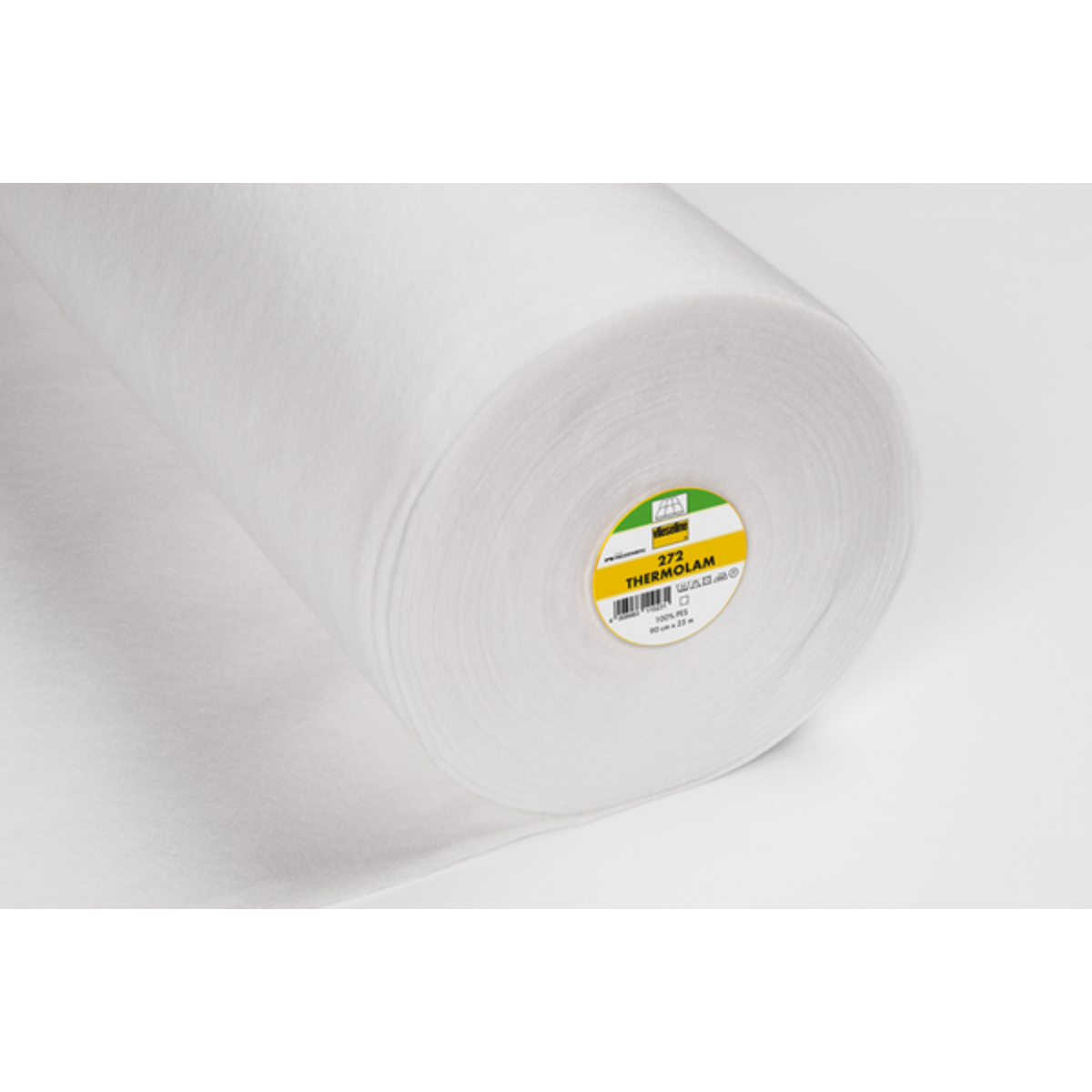
Thermolam is a heavyweight, soft and compact sew in wadding.
It has heat and insulation properties.
90cm wide.
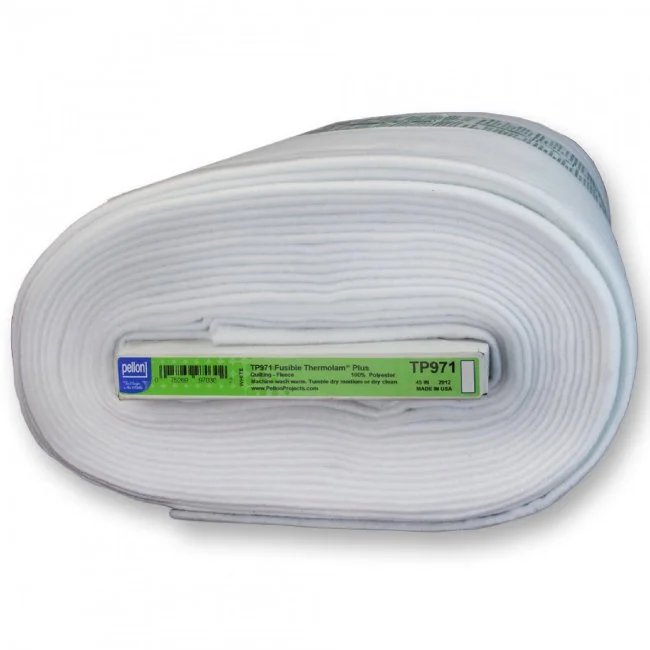
Legacy Extra Loft Fusible Fleece (TP971F) is a lofty, needle-punched fusible fleece that adds soft structure, padding and stability to your sewing projects. With a fusible adhesive on one side, it bonds easily to your fabric while retaining its loft, making it a favourite for bag making, quilting and home décor projects.
Ideal when you want a project to feel soft and padded without the firmness of foam stabiliser, TP971F gives bags and accessories a professional finish while remaining easy to sew through. It can also be fused to fabric, cardboard or wood for a wide range of creative projects.
Key Features:
Legacy Extra Loft Fusible Fleece (TP971F)
White
100% Polyester
One-sided fusible adhesive
Approx. 114cm (45") wide
Soft, lofty finish that retains its thickness after fusing
Sewing machine safe
Suitable for machine washing on a gentle cycle after construction
Perfect For:
Tote bags
Project bags
Cosmetic bags
Purses and pouches
Laptop sleeves
Quilted bags
Home décor projects
Craft projects requiring soft structure
How to Apply:
Place the fusible side against the wrong side of your fabric and press following the manufacturer's instructions. Allow the fabric to cool completely before handling so the adhesive can fully bond.
As with all interfacings and stabilisers, we recommend testing on a fabric scrap before starting your project.
Ordering Information:
This fleece is sold by the quarter metre.
Quantity 1 = 25cm
Quantity 2 = 50cm
Quantity 3 = 75cm
Quantity 4 = 1 metre
Multiple quantities will be supplied as one continuous length wherever possible.
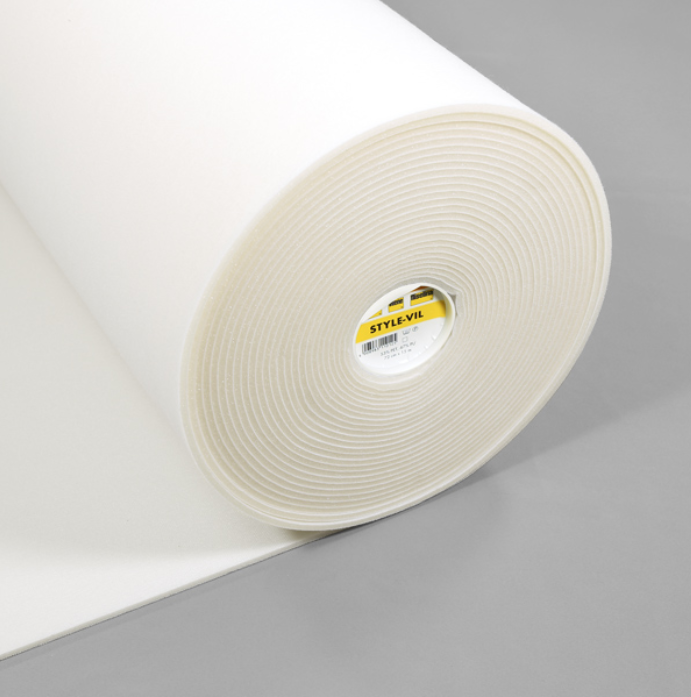
For creative needlework with three-dimensional effects, such as handbags, mobile phone pouches, eyeglass cases and for stabilising pieces of clothing, such as caps, hats and shoulder pads. Voluminous, sew-in foamed material laminated with wefts on both sides, made from synthetic materials and featuring high abrasion resistance.
Style-vil is approximately 75cm wide.
For crisp structure
Choose Decovil 1 Light or Decovil 1.
These are your best options when you want shape, firmness, and a bag that keeps a defined silhouette.
Decovil 1 Light – structured but still sewable for panels and flaps
Decovil 1 – very firm, best for bases, satchels, and sharp edges

Decovil I is a fusible non-woven with leather-like handle.
Decovil I is ideal for adding substantial structure, for example to the base of a bag, and can be fused to fabric using an iron.
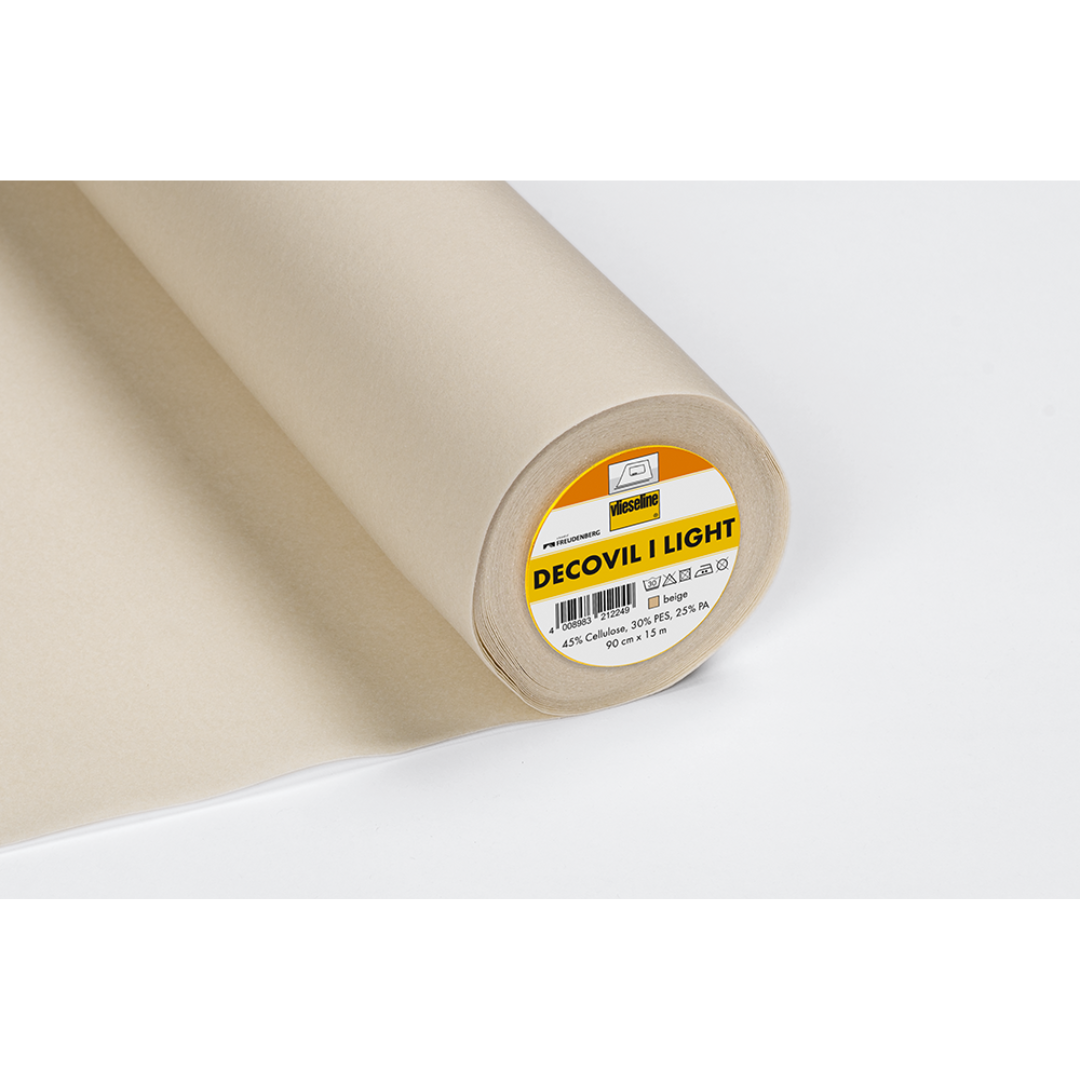
Decovil I Light is a fusible non-woven with leather-like handle.
Decovil I is ideal for adding substantial structure, for example to the base of a bag, and can be fused to fabric using an iron.
It is washable at 40˚C
Decovil I Light comes in 90cm width and is sold by the ¼ metre.
For bag bases and extra reinforcement
Bag bases often need a different kind of support from the rest of the project. While the body of the bag may need softness or gentle structure, the base usually needs firmness, durability, and resistance to sagging over time.
For most bag bases, the best choices are:
S520 for flat, board-like support that keeps the base crisp and stable
Decovil 1 for very firm, built-in structure in heavier-use bags
By Annie Base Stabilisers for removable acrylic base inserts
A useful way to think about bag bases is whether you need flat support, built-in structure, or a removable insert.
If you want the base to stay flat inside the bag, S520 is often exactly right. It gives that firm feel that works beautifully in fabric baskets, boxy pouches, lunch bags, and tote bases.
If the base needs to become part of the bag’s overall structure, Decovil 1 is the better choice. This works especially well in work bags, larger totes, and any design that needs to hold its shape even when carrying heavier items.
For travel bags and larger everyday bags, By Annie Base Stabilisers are a brilliant option. They slip easily into a fabric sleeve and make a dramatic difference to how well a bag carries weight and keeps its shape. As shown in our earlier post (‘Why bag base stabilisers matter’), the difference is especially noticeable in larger totes and travel bags.
Decovil I is a fusible non-woven with leather-like handle.
Decovil I is ideal for adding substantial structure, for example to the base of a bag, and can be fused to fabric using an iron.
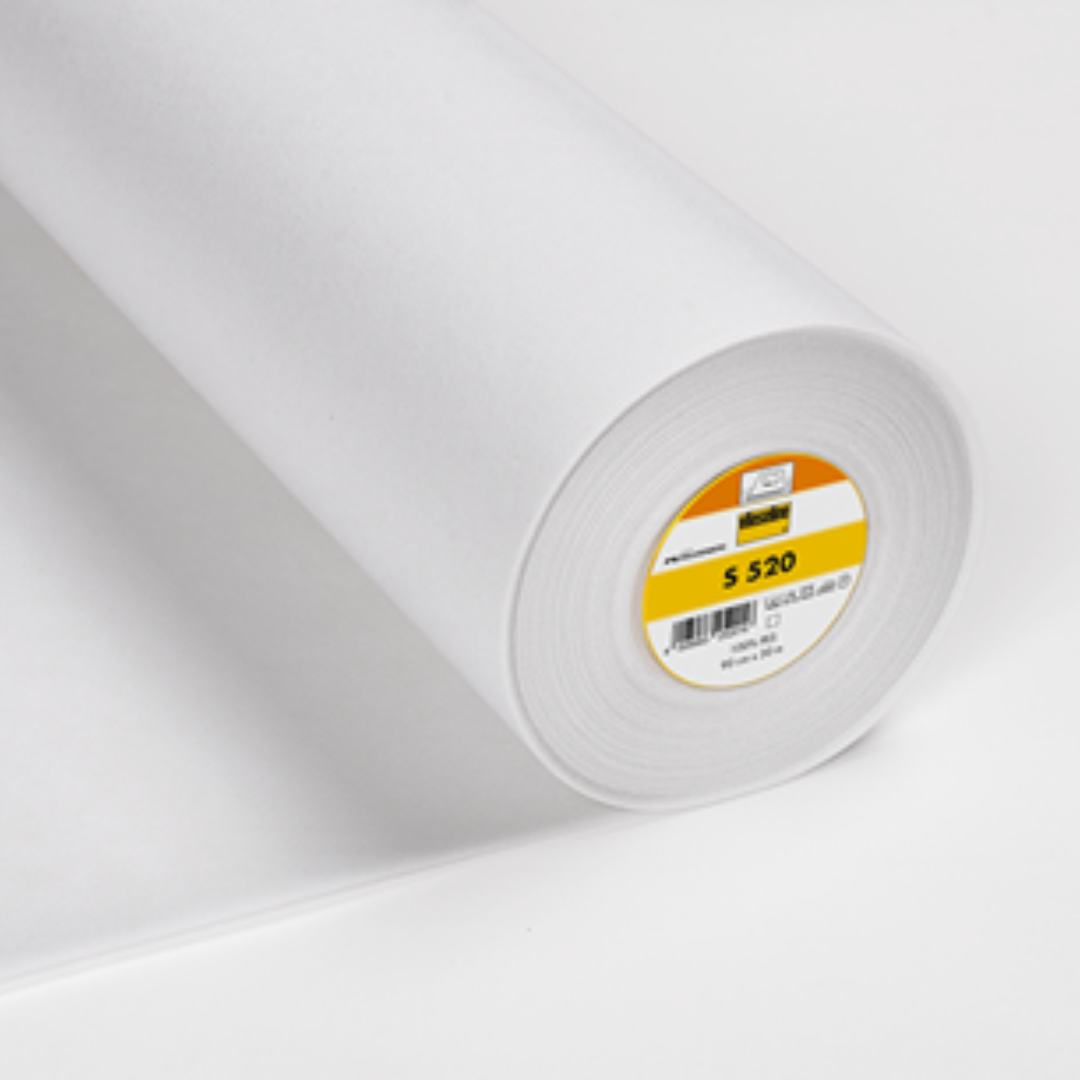
Vlieseline S520 is a firm fusible interlining used in bag making, baskets, belts and other creative handicrafts.
This is great for bag bases where you want more stability, and can often be used in place of Peltex.
Note: S520 is 30cm wide, so keep this in mind when purchasing.
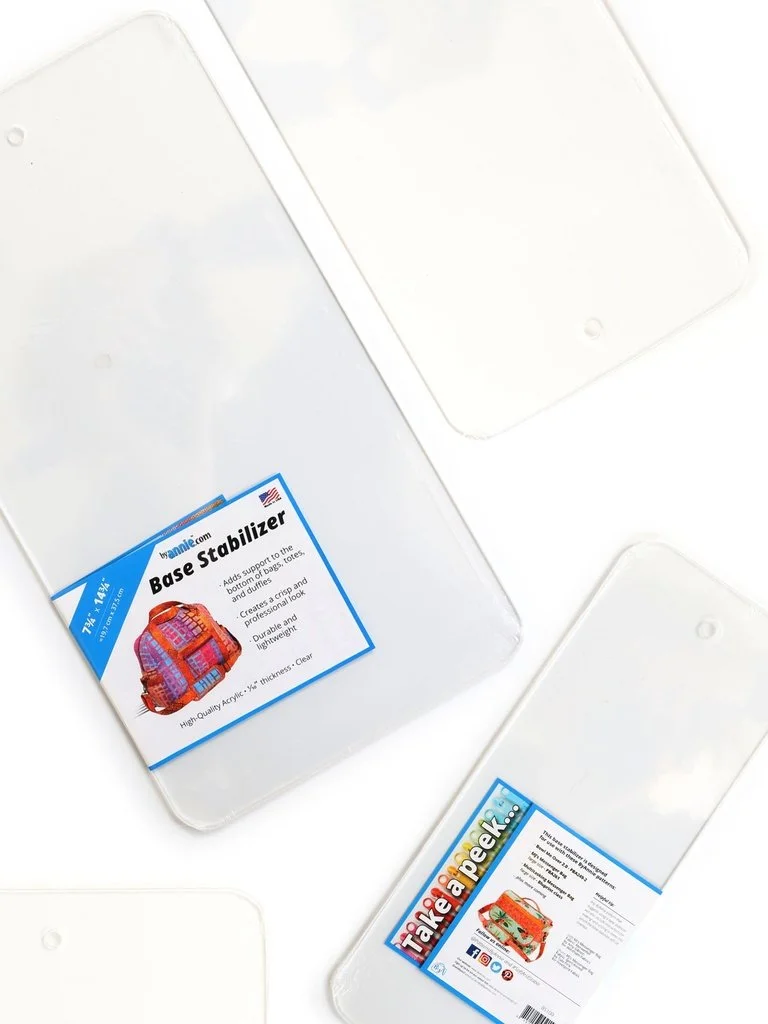
A base stabliser will add support to the bottom of your project.
Many bags benefit from a solid base to add strength to the bag and help it keep shape when in use.
The BS160 base stabiliser measures 7 ¾” x 14 ¾” (19.6cm x 37.5cm)
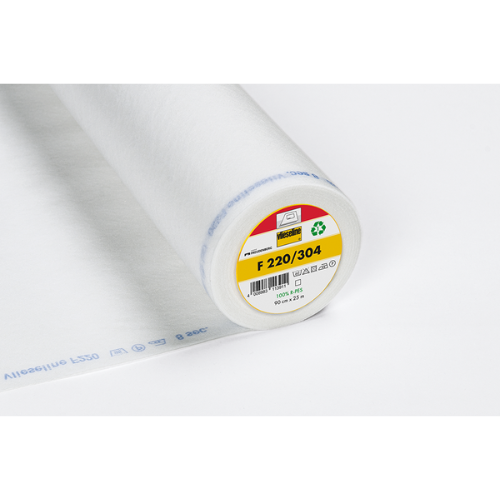
Non-woven lightweight fusuble interfacing, suitable for use with medium to heavyweight fabrics, such as canvas or twill.
This will add structure without adding too much bulk.
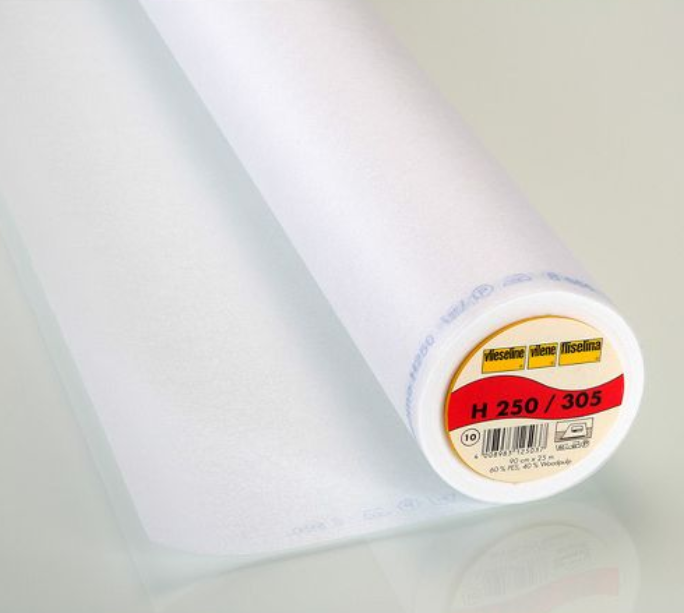
Versatile woven fusuble interlining for bags, shirts, blouses.
For use with lightweight to mediumweight fabrics.
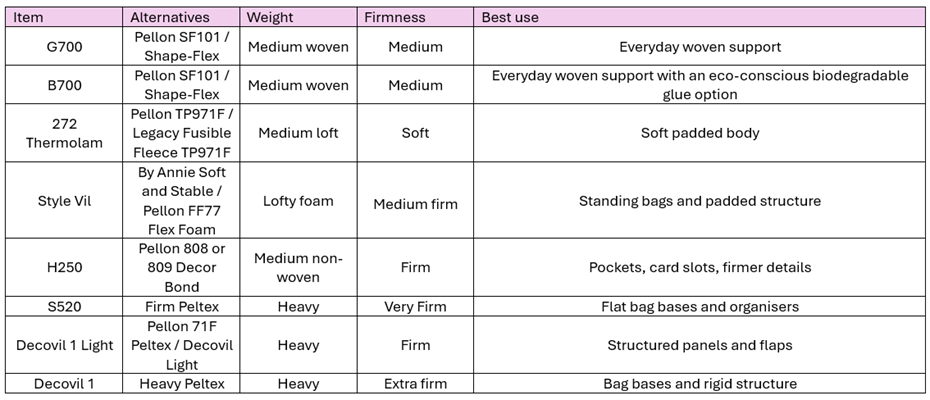
Conversion table: what to use instead of other brands
One of the biggest frustrations for home sewers is finding that a pattern calls for Pellon, Bosal, or another US stabiliser.
Here’s a practical conversion guide using the Vlieseline products we stock.
Final tip: choose the finish, not the brand name
The best bag makers rarely choose interfacing by brand name alone.
Instead, they decide whether the project needs:
soft body
crisp support
upright structure
padded loft
firm architectural shape
Once you start choosing based on the feel of the finished bag, interfacing becomes far less confusing, and much more creative.
That’s when products like G700, Style Vil, or Decovil Light on flaps start becoming confident design choices rather than guesswork.
At Tuesday’s Child Fabrics, our interfacing range is chosen specifically to help home sewers get professional bag making results with products that are easy to substitute and easy to trust.
If you found this guide useful, don’t forget to share with your sewing friends.